
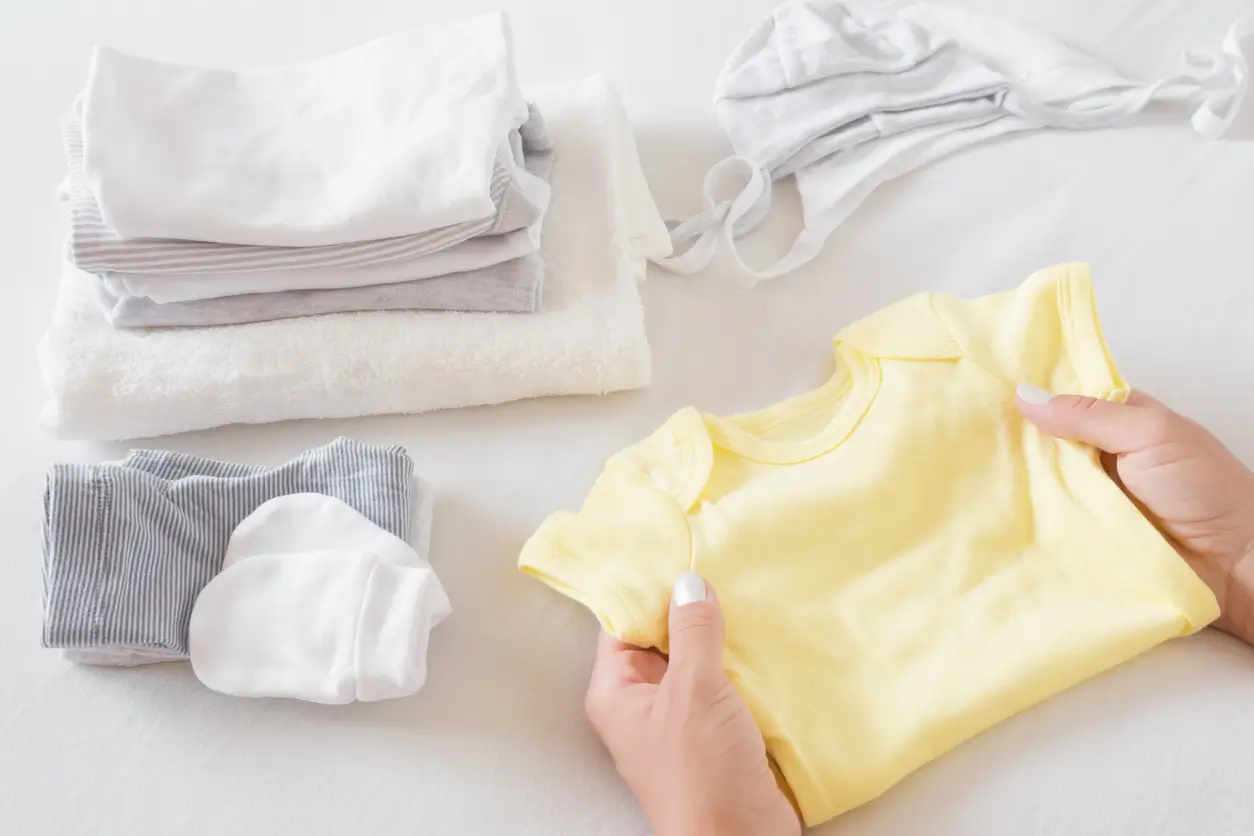
You don’t need every onesie pre-washed and folded into color coded bins by week thirty-two. Most babies do just fine in clothes washed a week or two before they arrive, and the real goal here isn’t a sterile nursery. It’s a home where you’re not digging through shopping bags for a clean sleeper at 2:00 AM.
This checklist walks through what to wash, which detergent choices actually matter, and how far in advance to tackle each category, so you can knock it out over a weekend instead of letting it hang over you for months. If the list feels like too much, a Wash and Fold Laundry Service can handle most of it while you handle everything else.
How Far in Advance to Start (and Why the Last Week Is Too Late)
About one in ten babies arrives before 37 weeks. That’s why most experienced parents start laundry around weeks 34 to 36, not week 39. Waiting until the final week assumes your due date is a guarantee, and it isn’t.
Start with what you’ll need first:
- The going-home outfit
- A few sleepers and onesies
- The crib sheet or bassinet liner
Everything else can be washed as it arrives. You don’t need every item in hand before you begin.
Here’s the thing to watch for: don’t wait for every last shower gift before starting a single load. If you do, nothing gets washed until the shower wraps up, sometimes just days before your due date. Wash what you already have, then treat later arrivals as small top-up loads.
Choosing a Detergent for Newborn Skin Without Overthinking It
Most pediatricians recommend a fragrance-free, dye-free detergent for the first few months. Newborn skin is thinner and more reactive than an older baby’s, so this one swap covers most of what matters.
You don’t need a detergent labeled specifically for babies. Plenty of regular fragrance-free formulas work just as well, often for less money than those marketed with a baby on the bottle.
Liquid detergent rinses more cleanly than powder in most machines, which matters when you wash smaller, more delicate items. Use the recommended amount for the load size, not more. Residue left in fabric sits against skin all day.
Skip fabric softener, too, at least for the first several washes. It leaves a residue that can irritate sensitive skin and reduce the flame resistance built into some sleepwear.
If you already use a laundry service for everyday loads, ask whether they’ll run baby items separately with a fragrance-free detergent. Many will, and it saves you from stocking a second product at home.
What ‘Fragrance-Free’ Actually Means on a Detergent Label
Detergent labels aren’t as straightforward as they look, and this is where a lot of new parents get stuck in the aisle.
- Fragrance-free means no fragrance chemicals were added at all.
- Unscented sometimes means a masking agent was used to cancel out other scents, which still counts as an added fragrance ingredient.
- Free and clear is the phrase to look for specifically.
Packaging design won’t tell you what’s inside. Soft colors and the word ‘sensitive’ on a label aren’t regulated terms, so don’t let them stand in for reading the ingredients.
Clothing: Onesies, Sleepers, Hats, and Everything Coming Home From the Hospital
Knowing how to wash newborn clothes properly starts with which items to prioritize: wash every onesie, sleeper, hat, and pair of scratch mittens before you pack your hospital bag. Include the specific going-home outfit. It’s the piece people forget most often, since it feels too early to prepare for a moment that’s still weeks away.
Use warm or cold water, and skip high heat in the dryer for the first few washes. Newer fabrics can shrink more than you’d expect. Wash new clothes separately from anything already in your regular rotation, at least the first time, so any manufacturing dust or dye residue doesn’t transfer to items already worn.
Start this category by weeks 34 to 36, and handle the going-home outfit first.
Bedding: Crib Sheets, Bassinet Liners, and the Mattress Protector Most Parents Forget
Wash crib sheets and bassinet liners at least once before use. This softens the fabric and removes any finishing chemicals left over from manufacturing. Two or three sets means you’re never caught without a clean set during a middle-of-the-night change. Having a clean set immediately available at 3:00 AM is worth more than almost any other preparation on this list.
Check the mattress protector’s care label before it goes in with everything else. Many are made with vinyl or a laminated layer that breaks down under high heat. A low-heat cycle or air-drying keeps that waterproof layer intact far longer than a hot cycle.
Aim to have bedding ready by week 36. It’s often the last thing set up, once the nursery furniture itself is finally in place.
Blankets, Swaddles, and Muslin Wraps
Swaddle blankets and muslin wraps genuinely improve with a wash or two before first use. The fabric softens and starts to drape the way it’s designed, instead of feeling stiff against newborn skin.
Skip high heat here as well. Muslin shrinks more than cotton knit, and a blanket that shrinks even slightly stops swaddling as effectively. Wash it, then lay flat or use a low tumble setting.
Start around week 35. A rotation of three or four blankets is plenty to begin with. Wash the rest as you actually need them, rather than tackling the entire registry in one sitting.
Towels, Washcloths, and Bath Essentials
Wash small hooded towels and washcloths once before first use, mainly to remove packaging residue. The same fragrance-free detergent you already use for clothing works fine here, too, so one load can cover both.
Plan to have two or three towels and half a dozen washcloths ready by week 36.
Bath items tend to get bought last, after clothing and bedding are already checked off, so they’re often still sealed when the baby’s first bath actually happens. Set aside a few early so that doesn’t happen to you.
Hand Me Downs and Gifts: What Actually Needs Rewashing and What Doesn’t
- Sealed and unworn since its last wash? Skip the rewash. A quick check for stains is enough.
- Pulled from an open drawer, donation bin, or unknown storage? Wash it. You can’t verify what detergent or conditions it was last exposed to.
- Brand new from a store? Wash it anyway. Manufacturing and shipping can leave behind dyes or sizing agents that no label will mention.
New and clean aren’t the same thing. A quick wash before first use costs you almost nothing in time or money, and it’s the safest default when you’re not sure.
Setting Up a Laundry System That Works Once You’re Home and Exhausted
The checklist above gets you ready for arrival. The real test starts once you’re home and running on interrupted sleep.
- Set up a small hamper just for baby items now, before you need it. Sorting becomes automatic instead of one more decision at midnight.
- Run smaller loads more often, rather than waiting for a full hamper. Newborn laundry piles up fast, mostly from spit-up and diaper leaks, and a backlog builds quickly if you keep waiting for a load that never quite fills.
- Keep a stain treatment within reach of the changing area. Treat spots the day they happen, not after a full wash cycle sets them in. A stain caught early comes out easily. One left for a week usually doesn’t.
When the Last Weeks Feel Too Short to Do It All: Clean’n’Press Can Help
Some weeks, this whole list is more than you have room for, and that’s a reasonable thing to hand off. Clean’n’Press offers Wash and Fold Laundry Service for Minneapolis area parents who need nursery bedding, hand me downs, and their own laundry backlog handled without adding to an already full week.
Schedule a FREE Pickup and Delivery Service, or drop off a first bundle and ask about newborn safe detergent options for your order.
0 Comments