

To insist that dry cleaners should have one standard price for every item overlooks the complexity of garment care. Behind every price tag is a combination of decisions, standards, and processes that directly impact how your garments are treated.
Individual cleaners may use different cleaning systems, staffing, and quality control routines. Those choices affect both cost and garment results. Knowing what influences pricing helps you feel more confident as a customer.
The Type of Garment Being Cleaned
When you hand something over the counter, the cleaner doesn’t just see “a jacket” or “a dress.” They look at how that piece is built and what it will take to clean it safely. Two garments can be similar in size but require very different levels of care. That’s often where pricing starts to differ. It’s less about the size of the item and more about how complex it is to handle.
Here’s what cleaners evaluate before deciding how to clean a garment:
- Fabric type: Natural fibers such as wool, silk, or linen react differently from synthetics. Some fabrics absorb solvents easily; others don’t. Each requires a specific approach.
- Construction: Structured items, such as suits, blazers, or pleated skirts, require extra attention to maintain their shape. Padding, canvas, and internal seams all matter.
- Lining: Fully lined garments take longer to clean and dry because there are essentially two fabrics to protect, not one.
- Embellishments: Beading, sequins, embroidery, buttons, and trims add risk. Cleaners often adjust their process to avoid damage or discoloration.
This is why dry cleaning prices differ between cleaners, even for what appears to be the “same” item. One shop may classify a garment as standard, while another sees the hidden complexity and treats it as a higher-care piece. The goal is to clean the item without shortening its life.
Cleaning Method and Equipment Used
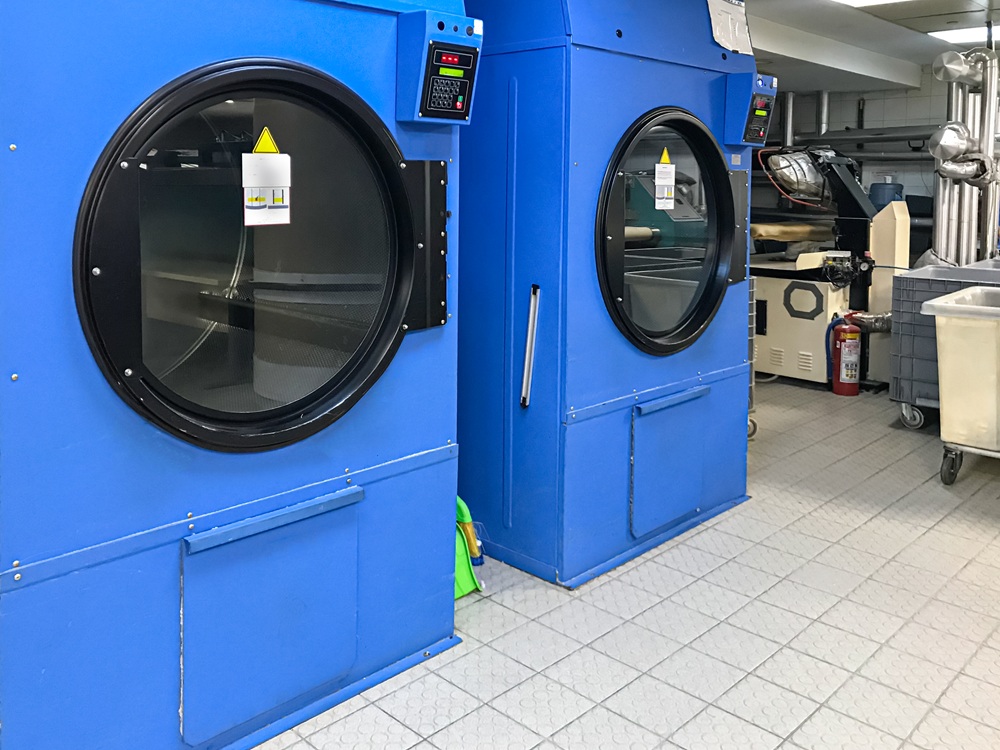
While customers may only see the finished garment, the processes and dry cleaning equipment used can vary significantly from one cleaner to another. Those choices influence how garments are treated and how long the process takes. That’s another reason dry cleaning costs can vary.
Most cleaners make decisions around:
- Solvent systems: Individual solvents clean differently. Some are better for oils, others for delicate fabrics. Certain systems are gentler but slower, which affects workflow.
- Machine settings: Cycle length, agitation level, and drying temperature all get adjusted based on the garment. More careful settings take more time.
- Pressing methods: Some items are pressed entirely by hand. Others use specialized equipment. Hand-finishing usually adds labor but allows for better control.
- Hand-finishing details: Touch-ups, reshaping, and smoothing seams often happen after pressing, especially on tailored or delicate items.
None of this needs to be overly technical to understand the impact. A cleaner using newer equipment or slower, fabric-friendly cycles may need more time per garment. Another cleaner may prioritize speed and volume. Both approaches exist in dry cleaning, and both influence pricing without automatically meaning one is “better” than the other.
Labor and Skill Level Involved
Skilled professionals guide each stage of the dry cleaning process. Much of the work relies on trained eyes and hands, especially before and after cleaning. That human expertise plays a big role in why pricing varies.
Some of the most skill-dependent steps include:
- Spotting: Identifying stains, understanding their causes, and choosing the safest treatment method. This happens before cleaning even starts.
- Fabric judgment: Knowing when a garment needs a lighter touch or an alternate process to avoid damage.
- Finishing: Proper pressing, shaping, and seam alignment take practice and attention.
- Tailoring knowledge: Even when no alterations are done, understanding garment construction helps cleaners avoid stress points and distortion.
Experienced cleaners often catch issues before they become problems. That might mean adjusting the cleaning plan or deciding a garment needs extra care. Dry cleaning prices differ between cleaners partly because experience levels differ.
Some dry cleaning services rely heavily on automation, while others depend more on skilled labor. These approaches aren’t defined by price, but by the level of hands-on care involved.
Quality Control and Garment Inspection Standards
Quality control is where many behind-the-scenes differences show up, even though customers rarely see this step. Inspection standards vary, and they affect both time and cost. After cleaning, garments are often checked again for remaining stains, pressing quality, and overall appearance.
A thorough quality control process may include:
- Post-clean inspection: Checking for remaining stains, fabric stress, or missed areas.
- Re-cleaning decisions: Some cleaners automatically reprocess items if the results aren’t satisfactory. Others return garments as-is unless a customer complains.
- Pressing review: Making sure seams lie flat, shapes hold, and details look intentional, not rushed.
- Final presentation: Button alignment, hanger choice, and protective coverings all factor in.
These steps add time but also reduce the risk of issues reaching the customer. When you ask how much dry cleaning costs, part of that price pays for consistency and accountability. Dry cleaning prices differ between cleaners because not all shops follow the same inspection standards or re-cleaning policies.
Additional Services Included in the Price
Many cleaners bundle small but meaningful services into their base price. Customers may not notice these details unless they’re missing. Over time, they make a real difference in garment longevity. They also require additional labor and attention that factor into pricing decisions.
Common extras that may be included are:
- Stain treatment attempts: Multiple spotting efforts before and after cleaning, even if the stain doesn’t fully disappear.
- Minor repairs: Loose buttons, small seam issues, or quick fixes are handled without a separate charge.
- Hand pressing: Instead of relying only on machines, some garments receive full hand-finishing.
- Garment shaping: Reshaping collars, cuffs, and structured areas so items look natural when worn.
Pricing often differs because the included items vary. Some cleaners build more care into the base price, while others itemize it. Both approaches work. They just package their value differently.
Enjoy Professional Dry Cleaning with No Pricing Surprises at Clean’n’Press!
If you’ve ever worried about damaging delicate garments at home or felt unsure whether your clothes were truly being handled properly, our seasoned dry cleaners at Clean’n’Press are here for you! Since 1987, we have delivered ultra-clean, crisp results without the mess or stress.
With our FREE Pickup and Delivery Service, getting expert dry cleaning and laundry care is as easy as scheduling online or calling us directly. Don’t leave your clothes to chance or risk costly mistakes. One call can save you time, frustration, and unnecessary wear on the pieces you love.
Call (651) 413-3701 today and rest assured your garments are in the hands of a trusted local cleaner who has put quality and customer satisfaction first for decades.
0 Comments